Have you ever been at a bustling celebration, the scent of spiced wine swirling around you, and paused to ponder the L’chaim meaning beyond just “to life”? That simple toast, whispered in Hebrew, drapes the room in warmth and reminds everyone that we’re in this together. I still remember leaning across my bubbe’s kitchen table, her wrinkled smile as she taught me the proper guttural “ch” sound. That tiny lesson became a bridge to our shared history. Is there anything better than the collective murmur of “cheers” that actually means “here’s to all of us”? Through weddings, Shabbat dinners, and even impromptu Friday night gatherings, this age-old phrase captures resilience, unity, and yes, a splash of joy—even on the toughest days.
What Is the True L’chaim Meaning in Jewish Tradition?
Definition and Literal Translation of “L’chaim”
The literal translation of “L’chaim” (לְחַיִּים) is “to life,” derived from the Hebrew root “chai” (חַי) meaning “life.” This powerful phrase is plural in form, implying “to lives,” symbolizing not just individual existence but the multiple dimensions of life and our collective vitality.
When we raise our glasses in a Jewish gathering and say “L’chaim,” we participate in a tradition that celebrates life’s blessings, joy, and resilience. This toast appears most often at weddings, Kiddush ceremonies, and other festive occasions where we affirm life even amidst adversity.
Origin and Etymology of the Phrase
The phrase combines the prepositional prefix לְ (l’, “to” or “for”) and the plural noun חַיִּים (chaim, “life”). This toast has ancient roots anchored in Jewish tradition: the Talmud associates it with drawing people closer and revealing inner emotions, particularly when sharing wine. Rabbi Akiva himself used “L’chaim” as a blessing, indicating its antiquity in communal rituals.
Over time, this expression evolved from solemn spiritual contexts connected to survival into today’s ubiquitous Jewish toast, embraced across all diasporic and cultural boundaries. Its plural form reminds us that the blessing encompasses our entire community, never to be uttered in solitude.
Pronunciation Guide
Let me share how to properly pronounce “L’chaim”. Say “Le-cha-yim” (לְחַיִּים), with the “ch” sound distinctly guttural—produced in the back of the throat, similar to the “ch” in the Scottish “loch” or German “Bach.” Avoid the soft “ch” of English words like “chair.”
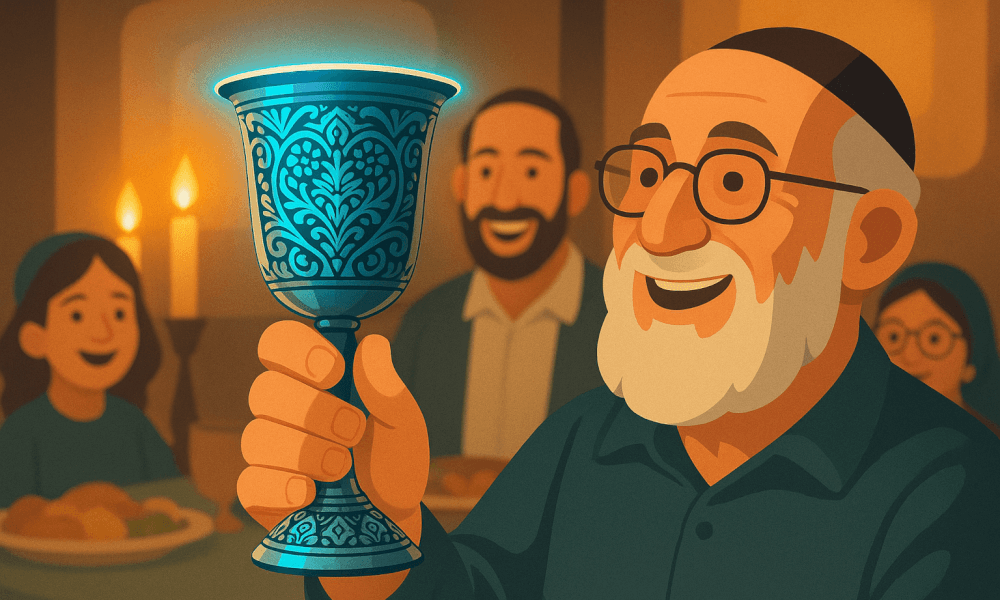
Different communities vary slightly. Many Ashkenazic Jews say “khah-yim,” while Sephardic speakers use “khah-yeem,” following Modern Israeli Hebrew norms. Common mistakes include pronouncing the “ch” as in “chair” or softening it to “k” or “h.” Proper pronunciation honors the tradition and adds depth to every shared toast.
Variations and Spelling in Hebrew
Several variations and spellings of this phrase exist, reflecting different traditions:
- The core Hebrew spelling is לְחַיִּים, composed of lamed (ל), chet (ח), yud (י), yud (י), mem (ם).
- Transliteration can appear as L’chaim, Lechaim, L’chayim, L’khayim, and more.
- Pronunciation differences echo community customs, with Ashkenazi speakers stressing the penultimate syllable and Sephardic/Israeli speakers the last.
- Extended forms like לְחַיִּים וְלְשָׁלוֹם (“to life and to peace”) underscore both vitality and harmony.
- The double yud has symbolic weight, representing the duality of physical and spiritual life celebrated in this blessing.
- While often compared to “Mazel Tov,” which means “good luck” or “congratulations,” “L’chaim” focuses on celebrating life itself.
Religious and Historical Context of L’chaim Meaning
Biblical and Religious Context
The concept of life (חַיִּים, chaim) appears repeatedly in the Torah as a central value. Proverbs 3:18 describes the Torah as a “Tree of Life” (עֵץ חַיִּים), symbolizing how divine wisdom nourishes our spiritual vitality. When we raise our glasses and say “L’chaim,” we invoke pikuach nefesh (saving life), a principle that overrides most other religious obligations.
Jewish tradition even teaches that when we say “L’chaim” together, the Almighty forgives our sins immediately, highlighting the communal nature of this blessing that unites us in joy.
Historical Evolution of the Custom
Would you believe that saying “L’chaim” dates back at least 2,000 years? The Talmud mentions this toast at celebrations like Rabbi Akiva’s son’s wedding. A millennium ago, Midrash Tanhuma recounts judges exclaiming “L’chaim!” when a defendant’s life was spared, expressing pure thanksgiving.
In Eastern European shtetls, “L’chaim” became especially poignant during hardship. Soviet-era Chassidic gatherings featured secret “farbrengens” where Jews raised vodka bottles in defiance, declaring “L’chaim” despite oppression. That resilience reminds us this toast celebrates life even in adversity.
The Gematria Connection
In Hebrew numerology, “L’chaim” (לְחַיִּים) equals 76, and its root “chai” (חי) equals 18—hence gifts in multiples of 18. Kabbalistic teachings reveal these numbers carry deeper spiritual truths. Interestingly, “L’chaim” shares its gematria with “minhag” (מִנְהָג), meaning custom—suggesting that every toast reinforces Jewish continuity. Saying “L’chaim” channels blessing, vitality, and positive spiritual energy into our world.
How Do We Practice L’chaim in Jewish Life?
When and How “L’chaim” Is Used
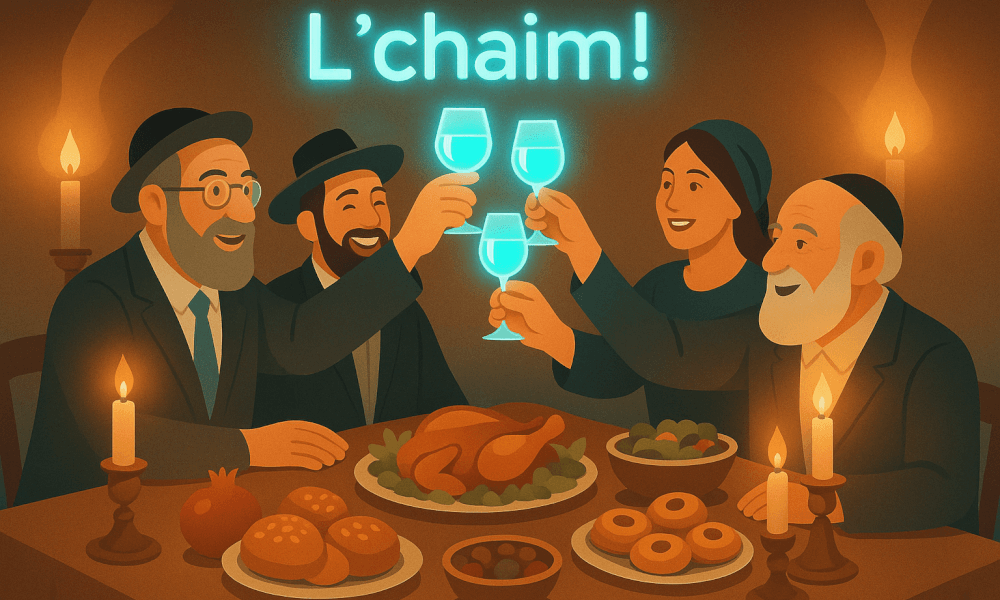
This cherished custom emerges during moments of shared joy and communal celebration. We raise our glasses and say “L’chaim,” most commonly at weddings, bar/bat mitzvahs, and holiday feasts featuring wine or spirits. The plural form ensures it’s never uttered alone, reflecting our core value of communal connection.
Whether at a formal Shabbat dinner or a casual gathering, this toast creates a spiritual bridge between participants, honoring life’s blessings—even amidst challenges.
Associated Rituals and Customs
Different communities have unique rituals that accompany the toast:
- Raising glasses together as a unified act, traditionally with wine or liquor.
- Chassidic extensions like “L’chaim v’l’vracha” (“to life and blessing”) for added depth.
- Some Orthodox circles avoid glass clinking to preserve the blessing’s power.
- Saying L’chaim at yartzeit gatherings with “tikkun” refreshments to elevate the deceased’s soul.
- Sephardic and Mizrachi customs incorporate unique melodies while preserving the core practice.
Common Responses to “L’chaim”
When someone offers “L’chaim,” the response is simply the same phrase. This creates a circle of blessing among all participants. In informal settings, people might add “B’ezrat Hashem” (with God’s help) or follow with “Mazel Tov,” depending on the occasion. Each response underscores our commitment to life and resilience.
Difference Between “L’chaim” and “Mazel Tov”
Here’s how these beloved expressions differ in everyday Jewish life:
Below is a comparison to clarify when each phrase is used:
| Aspect | L’chaim | Mazel Tov |
|---|---|---|
| Literal Meaning | “To life” (plural, communal) | “Good constellation/luck” |
| Primary Use | Toast when drinking together | Congratulations for achievements |
| Timing | Said before drinking | Said after good news or milestones |
| Focus | Collective blessing for all present | Recognition of individual accomplishment |
| Occasion | Any gathering with shared drinks | Specific events like weddings or births |
Contemporary Usage and Social Significance
Role in Jewish Celebrations
In Jewish celebrations, “L’chaim” transcends a simple toast to become the heartbeat of communal joy. At weddings under the chuppah, festive Shabbat dinners, or bar mitzvahs, the energy shifts when glasses are raised and “L’chaim” rings out. Faces light up, shoulders relax, and we affirm life itself. The proper l’chaim pronunciation (lə-ˈkhī(-ə)m) enhances this experience, creating an authentic connection to our heritage.
Communal Aspects and Shared Experience
When we gather to say “L’chaim,” we create a spiritual bridge between souls. This simple phrase generates a powerful shared experience that binds our community through joy and remembrance. The traditional response—simply echoing “L’chaim” or adding “Amen”—reinforces our collective commitment to life.
Usage in Modern Hebrew and Israeli Culture
In contemporary Israeli society, “L’chaim” flows through daily life as naturally as water through the Jordan. From casual restaurant patios in Tel Aviv to yeshivas in Jerusalem, its presence is everywhere. Modern media and social platforms showcase the phrase on festive banners and in everyday conversation. This cultural touchstone bridges secular and religious communities, embodying perseverance despite challenges.