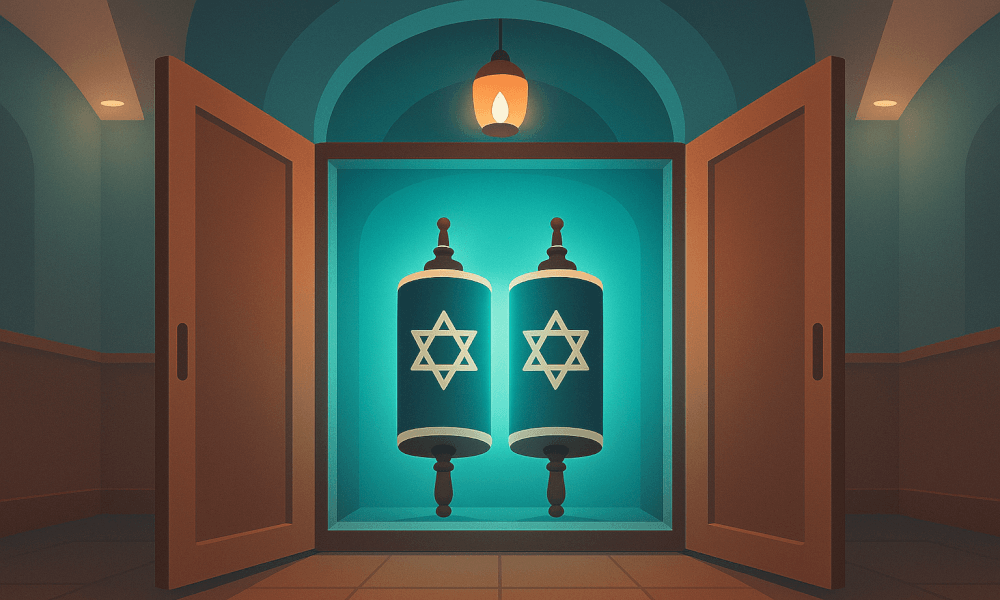
Last Friday morning, I couldn’t stop staring at our new aron kodesh, sunlight dancing off its carved doors like a spotlight on a timeless story. The warmth of the wood, still carrying hints of fresh polish, reminded me of the first time I stepped into my childhood synagogue. There was this hush, a faint scent of beeswax, and an electric sense that I was in the presence of something far older than me.
Have you ever paused to think about how a sacred ark becomes more than a cabinet for Torah scrolls? It’s that blend of artistry, tradition, and quiet intention that turns a simple enclosure into the beating heart of communal worship. In the rest of this piece, we’ll wander through the history, design secrets, and little details—like the perfect curtain color for the holidays—that make every holy ark a bridge between yesterday’s wisdom and today’s wonder.
What Makes an Aron Kodesh Sacred and Meaningful?
In exploring the spiritual realm of synagogue furnishings, we first encounter the foundation of communal Jewish worship. The Aron Kodesh, or Holy Ark, is the sacred cabinet specially designed to house Torah scrolls, serving as the central focus of the synagogue. It’s not just furniture—it’s the physical manifestation of Torah’s supreme importance in Jewish life.
Typically positioned against the eastern wall facing Jerusalem, this ornate enclosure connects each service to our ancient traditions and maintains our spiritual orientation toward the Holy City. The moment the ark opens during Torah readings on Shabbat and holidays, the entire congregation rises in respect. This simple act reminds us that the Torah isn’t just a book but the living heart of Jewish spiritual practice, with the Aron Kodesh serving as its protective vessel.
The symbolism embedded in the Torah ark speaks volumes about our relationship with the divine. Just as the ark houses the sacred Torah, our bodies house our divine souls—making each of us walking sanctuaries. The parochet (curtain) covering the ark recalls the veil of the ancient Temple’s Holy of Holies, creating that delicate balance between concealment and revelation that characterizes our approach to the divine. When I stand before our synagogue’s ark, the gates depicted in its carvings always remind me of Jacob’s dream—that powerful image of heaven connecting to earth right where we stand.
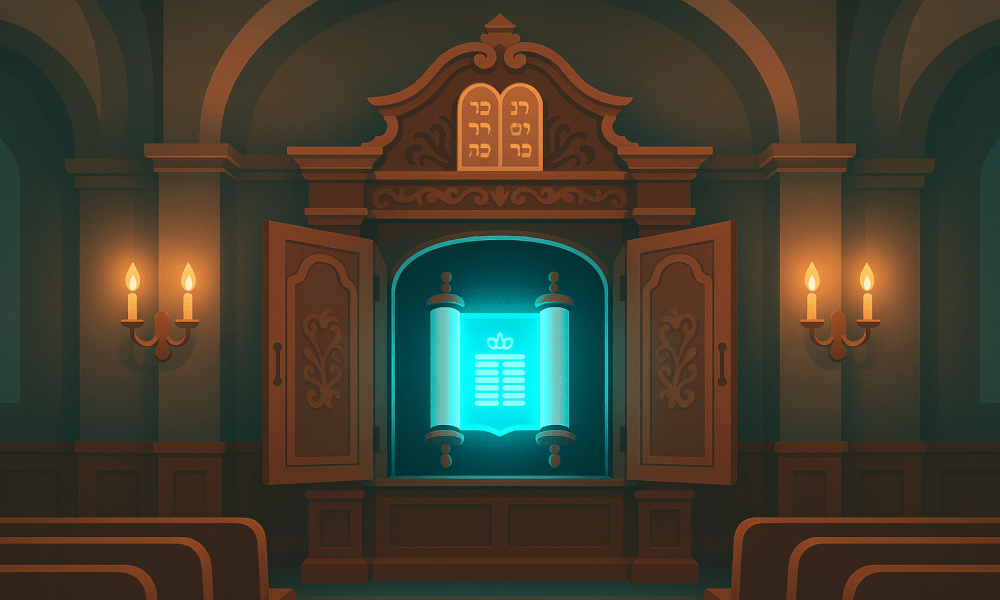
The historical origins of the Aron Kodesh trace back to the biblical Ark of the Covenant, which contained the original stone tablets of the Ten Commandments. After the destruction of the Temples and the loss of the original Ark, our ancestors developed the synagogue Aron Kodesh to preserve Torah continuity. Initially, scrolls were laid flat in portable containers; over time, the ark evolved into the elaborate upright cabinets we recognize today. This evolution mirrors our journey from a nomadic people to established communities, each maintaining that essential connection to Jerusalem through the reverence of the sacred ark in synagogue.
How Does Modern Aron Kodesh Design Honor Tradition?
Contemporary ark designs balance deep respect for tradition with fresh artistic expression. By examining structure, materials, and decorative motifs, we see how each element connects us to our heritage.
For instance, traditional materials and construction techniques link ancient practices with modern craftsmanship:
- Hardwoods (oak, walnut, maple) provide durability and echo the “etz chaim” (tree of life) symbolism.
- Stone or marble elements recall the Temple’s architecture and the tablets of the Ten Commandments.
- Hand-carving techniques preserve artisanal tradition, especially for decorative elements.
- Gold or silver plating on handles and ornaments reflects the Torah’s precious nature.
- Dovetail joinery and other traditional woodworking methods ensure integrity without modern fasteners.
- Natural oils and waxes for finishing maintain historical authenticity and avoid synthetic chemicals near sacred scrolls.
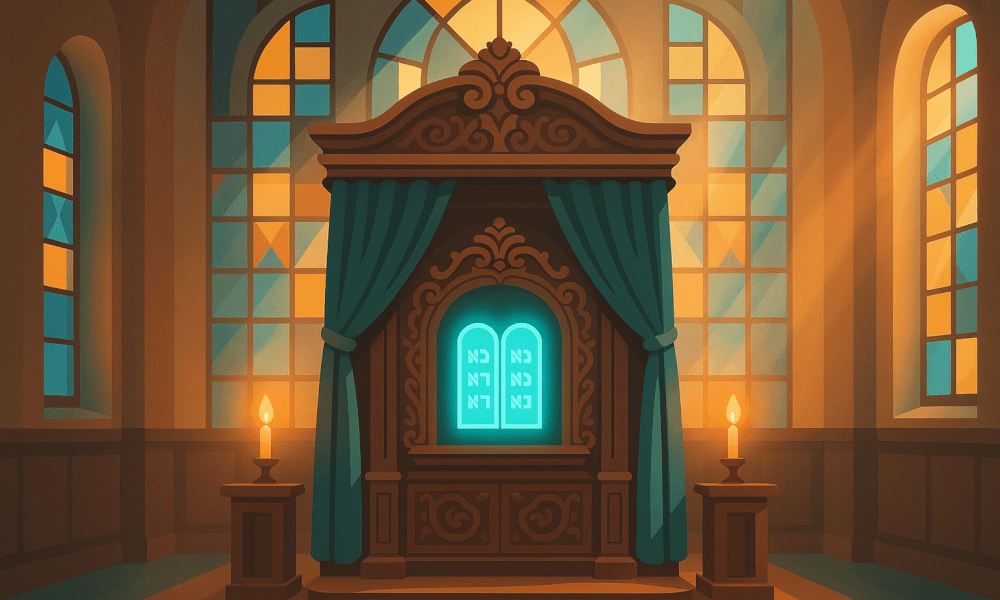
The doors often feature the most intricate work—carvings or metalwork depicting Lions of Judah, crowns, or the Tablets of the Law. Behind these doors, the parochet adds another layer of sanctity, referencing the veil that separated the Holy of Holies in the ancient Temple. Have you noticed how these curtains change with the Jewish calendar? White for the High Holidays symbolizes purity, while deep blues and reds adorn the ark during regular Shabbat services. These details aren’t merely decorative—they’re visual cues that enhance our spiritual experience and link us to millennia of tradition.
When considering an Aron Kodesh for your community, it helps to weigh the differences between custom-built and prefabricated options:
| Aspect | Custom-Built Arks | Prefabricated Arks |
|---|---|---|
| Design flexibility | Unlimited possibilities tailored to space and aesthetics | Catalog options with minor customization |
| Cultural specificity | Can incorporate specific community traditions | Generally features universal Jewish symbols |
| Cost | Higher investment ($20,000–$100,000+) | More affordable ($5,000–$25,000) |
| Timeframe | Longer production (6–18 months) | Shorter delivery (1–3 months) |
| Craftsmanship | Handcrafted by skilled artisans | Machine-manufactured |
| Materials | Premium woods and elements | Standard materials |
| Sustainability | Can prioritize local, eco-friendly materials | Limited ecological options |
| Symbolism | Deep integration of community-specific meaning | Standard symbolic elements |
Contemporary trends often incorporate sustainable materials like reclaimed wood, responsibly sourced stone, and non-toxic finishes—reflecting our role as stewards of creation. Lighting has also become integral, with subtle LED illumination highlighting the ark’s features. Some designers use translucent alabaster or backlit glass, allowing light to symbolically emanate from the Torah itself. Digital systems now coordinate the Ner Tamid, ark lighting, and even opening mechanisms with the prayer service timing, blending innovation with reverence.
Essential Aron Kodesh Guidelines in Jewish Law
Halachic guidelines for Aron Kodesh construction reflect both practical needs and spiritual principles. While Jewish law doesn’t prescribe exact specifications, certain standards have become customary.
The ark must face Jerusalem, reinforcing our connection to the Temple Mount and ensuring congregants pray in the proper direction. Its height is typically elevated—often requiring steps—symbolizing the ascent to holiness and making the Torah visible to all. Materials must be durable and respectful; flimsy substitutes are considered inappropriate for housing sacred scrolls.
Different Jewish traditions bring unique expressions to Aron Kodesh design:
- Sephardic arks often feature rounded tops and elaborate metalwork influenced by Middle Eastern artistry.
- Ashkenazic designs include columns and pointed arches inspired by European synagogues.
- Mizrahi communities incorporate colorful mosaics and geometric patterns reflecting North African heritage.
- Reform congregations may adopt simplified, contemporary styles while retaining key symbols.
- Italian Jewish communities traditionally use tiered arks with Renaissance-inspired ornamentation.
- Chassidic arks are highly ornate, emphasizing mystical symbolism.
Placement guidelines enhance the ark’s spiritual significance. Positioned against the eastern wall, the ark creates the focal point toward which all prayer is directed, maintaining our yearning for Jerusalem. Elevating the ark several steps above the main floor honors the Torah and ensures visibility, creating a natural hierarchy within the sanctuary.
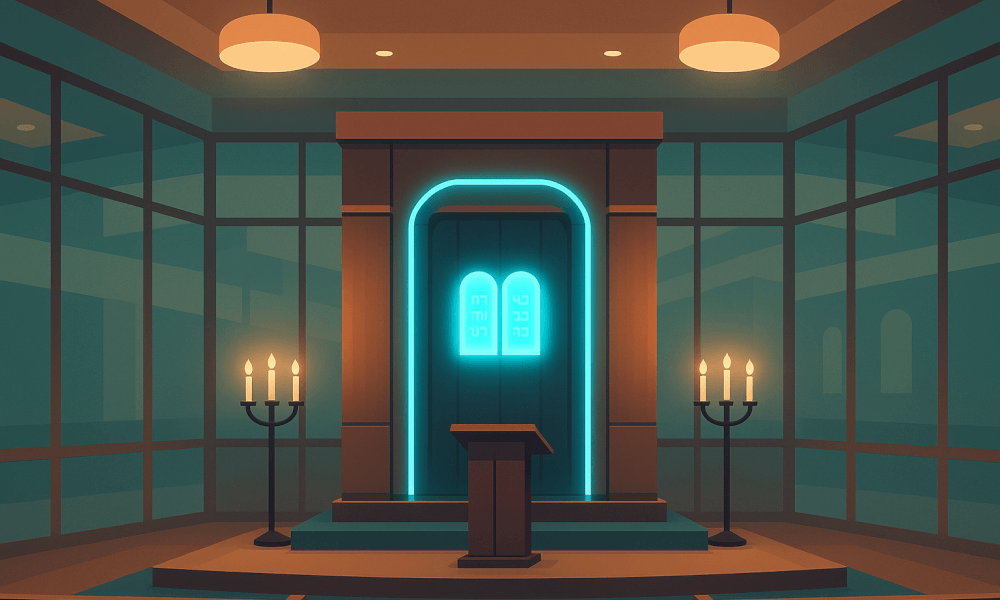
The Aron Kodesh also relates intimately to other synagogue elements. The bimah (reading platform) works in tandem with the ark—while the ark houses the Torah, the bimah is where it comes to life through public reading. Above the ark, the Ner Tamid burns continuously, symbolizing God’s eternal presence. This choreography—moving the Torah from ark to bimah and back—brings divine wisdom into our midst before returning it to its resting place.
Preserving Your Aron Kodesh
To ensure your Aron Kodesh remains beautiful and functional for generations, follow these care guidelines:
- Clean wooden surfaces monthly with a soft, lint-free cloth lightly dampened with a mild solution of Murphy Oil Soap, avoiding excessive moisture near joints or carvings.
- Polish metal elements (handles, decorative pieces) twice yearly using metal-specific products—silver polish for silver, brass polish for brass.
- Inspect the parochet (curtain) seasonally for dust or wear, dry-cleaning when necessary and rotating multiple curtains to minimize light exposure.
- Maintain proper humidity (40–60%) and adequate ventilation in the sanctuary to prevent wood cracking, warping, or mold growth.
- Prevent exterior moisture infiltration by applying sealants or waterproof paint if the ark sits against an outside wall.
- Use a humidifier inside the ark in very dry climates to keep relative humidity between 35–55%, protecting scrolls from drying.
- Schedule professional conservation assessments every 3–5 years to identify early structural issues, checking joinery and support mechanisms.
- Reapply finish (shellac, wax, or oil depending on the original) every 5–7 years to protect wood surfaces and preserve luster.
When it comes to the aron kodesh, it really is a bridge between yesterday and tomorrow—a sacred cabinet that whispers ancient stories while fitting perfectly into modern life. I still remember the first time I ran my fingers along the polished oak doors in my childhood shul—the faint scent of varnish mixed with beeswax, the way the light caught the tiny gold filigree of crowns carved above the tablets. Standing there, I felt an odd hush—like the universe paused just long enough for me to catch my breath. Isn’t it funny how a simple curtain, that parochet, can feel like the threshold to something immense? Whether you’re marveling at hand-carved lions or the glow of hidden LEDs, that holy ark invites us to lean in, listen, and remember why these scrolls still carry the weight of millennia. So next time you step up those few elevated stairs, take a moment—breathe in that rich mix of wood and history, and let it draw you back into the story we’re all part of.