There’s something about birkat hamazon that turns a casual dinner into a moment of quiet wonder. I remember the smell of my grandmother’s braided challah wafting from the oven, the way its golden crust crackled beneath her fingertips as she sliced each piece. Have you ever wondered why we pause to offer that after-meal blessing, sometimes called bentching or the Grace After Meals?
It’s more than tradition—it’s a chance to savor the warmth of family, the sweetness of shared stories, and the simple joy of being fed. In the next few minutes, we’ll dive into this age-old ritual, explore its roots in ancient texts, and discover how saying these words can link us to generations past while bringing everyone at the table a little closer.
Understanding Birkat Hamazon: A Comprehensive Guide
Imagine sitting at your Shabbat table, the meal concluded, and that familiar sense of gratitude washing over you. Before we explore the text itself, let us consider why this prayer has remained so profound across centuries.
Birkat Hamazon, or Grace After Meals, isn’t just a prayer—it’s our biblical obligation that transforms an ordinary meal into a sacred experience. The Torah commands in Deuteronomy 8:10: “When you have eaten your fill, give thanks to the Lord your God for the good land which He has given you.” This Jewish prayer after eating expresses gratitude for God’s sustenance, appreciation for the Land of Israel, yearning for Jerusalem’s rebuilding, and prayers for our personal and communal wellbeing.
The roots of Birkat Hamazon stretch deep into our ancient past, weaving together biblical commandment and rich rabbinic tradition. According to the Talmud in Berakhot 48b, the structure we use today developed organically through Jewish history. Moses instituted the first blessing (HaZan) during the manna period, expressing gratitude for divine sustenance. When Joshua led our ancestors into the Promised Land, he established the second blessing (HaAretz), giving thanks for Israel.
Later, King David and Solomon composed the blessing for Jerusalem (Boneh Yerushalayim) during the building of the Temple. The fourth blessing (HaTov VeHaMeitiv) was added by Rabban Gamliel and the rabbis at Yavneh, commemorating historical events and emphasizing God’s continual goodness. Our prayers often reflect our people’s journey through time, linking our simple act of eating to our broader Jewish identity and destiny.
To understand this prayer’s core structure, let’s look at its four essential components:
- First Blessing (Birkat Hazan) – Praises God for sustaining all creation; often sung aloud during communal meals to express collective gratitude.
- Second Blessing (Birkat Ha’aretz) – Thanks God for the Land of Israel and Torah, recapping Jewish history from the Exodus.
- Includes special insertions during Purim and Hanukkah.
- Some communities add references for Yom Ha’atzmaut.
- Third Blessing (Birkat Yerushalayim) – Shifts from thanksgiving to supplication, pleading for God’s mercy and Jerusalem’s rebuilding.
- Connects our physical nourishment to spiritual–national restoration.
- References King David and Solomon’s historical roles.
- Fourth Blessing (Birkat HaTov VeHaMeitiv) – Emphasizes gratitude for God’s ongoing kindness and goodness.
- Harahaman Prayers – Short supplications following the core blessings, asking for livelihood, the Messiah’s coming, and wellbeing for all present.
Whether you follow the Sephardic tradition, use an Ashkenazi version, or prefer the Chabad nusach, the essence of this mitzvah remains constant. Many people use a Birkat Hamazon PDF or online resource to guide them through this important table ritual, especially when learning the halacha or observing the special zmanim for this blessing.
When Should You Recite Birkat Hamazon?
Full Hebrew Text of Birkat Hamazon
Have you ever wondered about the original Hebrew text that Jews have been reciting after meals for thousands of years? The complete Hebrew text of Birkat Hamazon consists of four primary blessings traditionally attributed to biblical figures—Moses, Joshua, King David and Solomon, and the rabbis of Yavneh.
This biblically mandated prayer begins with the beautiful opening blessing: “בָּרוּךְ אַתָּה יְיָ אֱלֹהֵינוּ מֶלֶךְ הָעוֹלָם הַזָּן אֶת הָעוֹלָם כֻּלּוֹ…” acknowledging God as the One who nourishes the entire world with goodness. Numerous versions exist—Ashkenazi, Sephardic, and others—each reflecting the rich tapestry of our people’s journey through time and space. Many prefer having a Birkat Hamazon pdf for Shabbat or everyday use, following either Ashkenaz or Sephardic customs.

English Translation of Birkat Hamazon
After familiarizing yourself with the Hebrew, you might explore clear and accurate English translations. Several versions (commonly found when searching “Birkat Hamazon English”) reflect different minhagim (customs) and theological emphases. The Sephardi and Spanish & Portuguese translations, for example, contain subtle differences—some emphasize dependence on God, others highlight covenantal relationships or Messianic hopes.
These variations aren’t just academic—they reflect the beautiful diversity of Jewish communities worldwide. Whether you follow Chabad customs or other traditions, you can find appropriate texts for this important prayer after eating.
Transliteration for Non-Hebrew Readers
Struggling with Hebrew pronunciation? That’s where transliteration becomes a lifesaver. AI-powered transliteration tools convert Hebrew script into readable phonetic form with vowels and stress marks, making it easier to pronounce Birkat Hamazon correctly. Many platforms also offer audio pronunciation guides and practice modes so you can listen and compare your recitation.
These AI solutions often combine transliteration with translation, helping you not just recite the bracha acharona accurately but also understand its profound meaning. Proper zmanim and halachic guidance ensure you recite this Torah blessing after a meal according to your tradition.
How Do Different Communities Practice Birkat Hamazon?
When and How to Recite Birkat Hamazon
Birkat Hamazon should be recited immediately after finishing a meal that includes bread, specifically after consuming at least a kezayit (olive-sized portion) within 3–4 minutes. On Shabbat and holidays, we add special sections, which is why many encourage reciting aloud so nobody forgets key additions.
Washing hands beforehand (mayim acharonim) helps center the mind before blessing. Hearing oneself recite the words enhances kavana (intention) and deepens your connection to the prayer. Using a Birkat Hamazon pdf or Hebrew text can be especially helpful when you’re learning this essential Jewish table ritual.
Laws and Customs Surrounding Birkat Hamazon
The depth of Birkat Hamazon extends far beyond a simple “thank you.” Each of the four blessings has a distinct origin: Moses after the manna, Joshua upon entering Israel, David and Solomon for Jerusalem, and the sages at Yavneh following historical upheaval. Customs vary between communities, especially in the Harahaman section.
At lifecycle events like weddings or brit milah, we add special insertions that sanctify those occasions. These customs aren’t just nice traditions—they’re binding in Jewish law, similar to mitzvot!
Conditions for Reciting Birkat Hamazon
Let’s examine the specific conditions that create this obligation:
- Requires consuming at least a kezayit (olive volume) of bread that satisfies hunger.
- Necessitates eating what’s considered a “meal” by most people’s standards (e.g., two slices of pizza).
- Applies equally to women, though there’s scholarly debate on whether their obligation is biblical or rabbinic.
- Should ideally be recited in the same location where you ate, though most authorities permit reciting elsewhere if you unintentionally leave.
- Must be spoken aloud enough to hear yourself, though customs regarding volume vary.
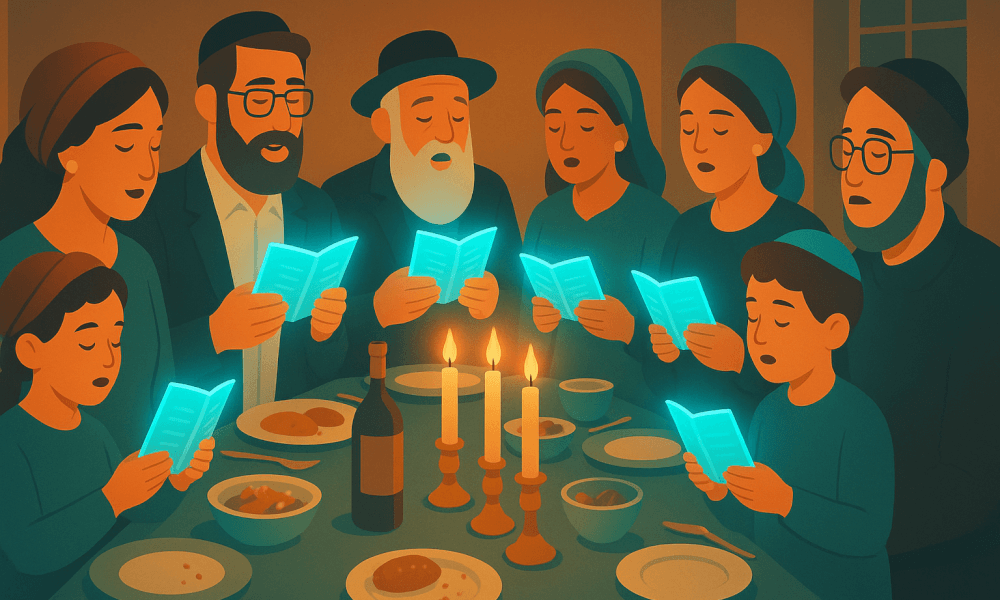
- Includes a Zimun (invitation to bless) when three or more men have eaten together.
- Allows for fulfillment by listening attentively to another’s recitation if you’re unable to recite it yourself due to illness or fatigue.
- For those unfamiliar with Hebrew, a transliteration or English version can help properly fulfill this mitzvah.
Variations Between Ashkenazi and Sephardic Traditions
Below is a comparison of key practices in Ashkenazi and Sephardic communities:
| Aspect | Ashkenazi Practice | Sephardic Practice |
|---|---|---|
| Wording | Includes additions like Devai Haser at weddings | Different phrasing in Harahaman; may include Ladino hymn |
| Responses | Answer Amen after blessings and special lines | Generally no verbal responses during Birkat Hamazon |
| Melodies | Solemn, traditional nusach | Joyful tunes, sometimes resembling Spanish folk melodies |
| Interruptions | Minimally allowed in fourth blessing | Usually no interruptions permitted |
| Women’s practice | May recite again if in doubt | Generally do not recite again if uncertain |
| Event-specific elements | Special lines for lifecycle celebrations | Unique liturgical poetic additions |
| Resources | Ashkenazi PDF widely available | Sephardic PDF and texts preserve these distinct traditions |
Birkat Hamazon for Special Occasions
During simchas, Birkat Hamazon adapts beautifully to celebrate life’s precious moments. At weddings, Ashkenazi communities add opening lines like Devai Haser to the zimmun, and all include Sheha-Simchah bi-m’ono to honor the joyous occasion. After concluding the four blessings, we continue with Sheva Brachot, which require a minyan and new guests (Panim Chadashot).
At a brit milah, special ha-Rachaman prayers elevate the moment’s spiritual significance. Communal meals of three or more transform the individual mitzvah into a shared experience through the zimmun. On Shabbat, additional passages make this bentching even more meaningful. These variations aren’t just liturgical formalities—they sanctify life’s most beautiful celebrations through gratitude to Hashem.
Digital Tools for Learning
Audio Resources and Pronunciation Guides
Audio resources have revolutionized how we learn Birkat Hamazon. Sites like SiddurAudio.com offer clear, well-paced recordings with modern Conservative pronunciation, perfect for memorization. YouTube channels like “Jewish Teachings For All” break down the prayer’s structure and melody, invaluable for beginners. Many of these resources provide both Ashkenazic and Sephardic pronunciations, accommodating different family traditions for grace after meals.
Printable Resources and Downloads
You can enhance your practice with these printable materials:
- Laminated tri-fold cards from the Rabbinical Assembly – perfect for tucking into your siddur or bringing to restaurants
- Comprehensive Birkat Hamazon PDF downloads in traditional Ashkenazi format from synagogue websites
- “Count Your Blessings” booklets featuring Hebrew, English translation, and transliteration – ideal for beginners
- Study guides by contemporary rabbis like Pamela Barmash for deeper halachic insights
- Digital formats compatible with tablets and smartphones for on-the-go learning
- Transliterated versions supporting learners with limited Hebrew proficiency
- Educational materials designed for classroom integration on gratitude in Jewish meal tradition
Common Questions and Practical Tips
When teaching Birkat Hamazon, I often encounter debates about whether women’s obligation is Torah-based or rabbinic, and questions about repeating the prayer in cases of doubt. Ashkenazim typically repeat the entire text if unsure; Sephardim recite only the first three blessings.
Digital tools now offer interactive solutions—prayer apps can send reminders after meals based on zmanim, halachic decision trees resolve common doubts by tradition, and voice recognition technology improves pronunciation. I recommend apps that segment the prayer into manageable portions, explaining each section’s meaning to enhance kavana during this mitzvah. Wouldn’t your practice of this essential table ritual benefit from having these resources at your fingertips?
Birkat Hamazon remains one of my favorite ways to hit pause after a meal. I can still smell the lingering challah crumbs, taste the last drop of soup, and feel that shift when we move from eating into reflection.
Ever noticed how a simple grace after meals can turn a rushed dinner into a meaningful pause? Back when I hosted my first Shabbat lunch, I was awkwardly flipping pages until my grandma whispered, “Speak from the heart.” Ever since, that blessing after food has become my secret rhythm—closing my eyes, letting the words roll out, and feeling a little electric buzz around the table. These aren’t just ancient recitations; they’re your invitation to slow down, savor each bite, and connect with everyone at the table. Next time you finish a meal, try it yourself: acknowledge the flavors, the laughter, the crumbs under your plate. Let that sweet moment of thanks guide you—because gratitude, after all, is the real magic ingredient.